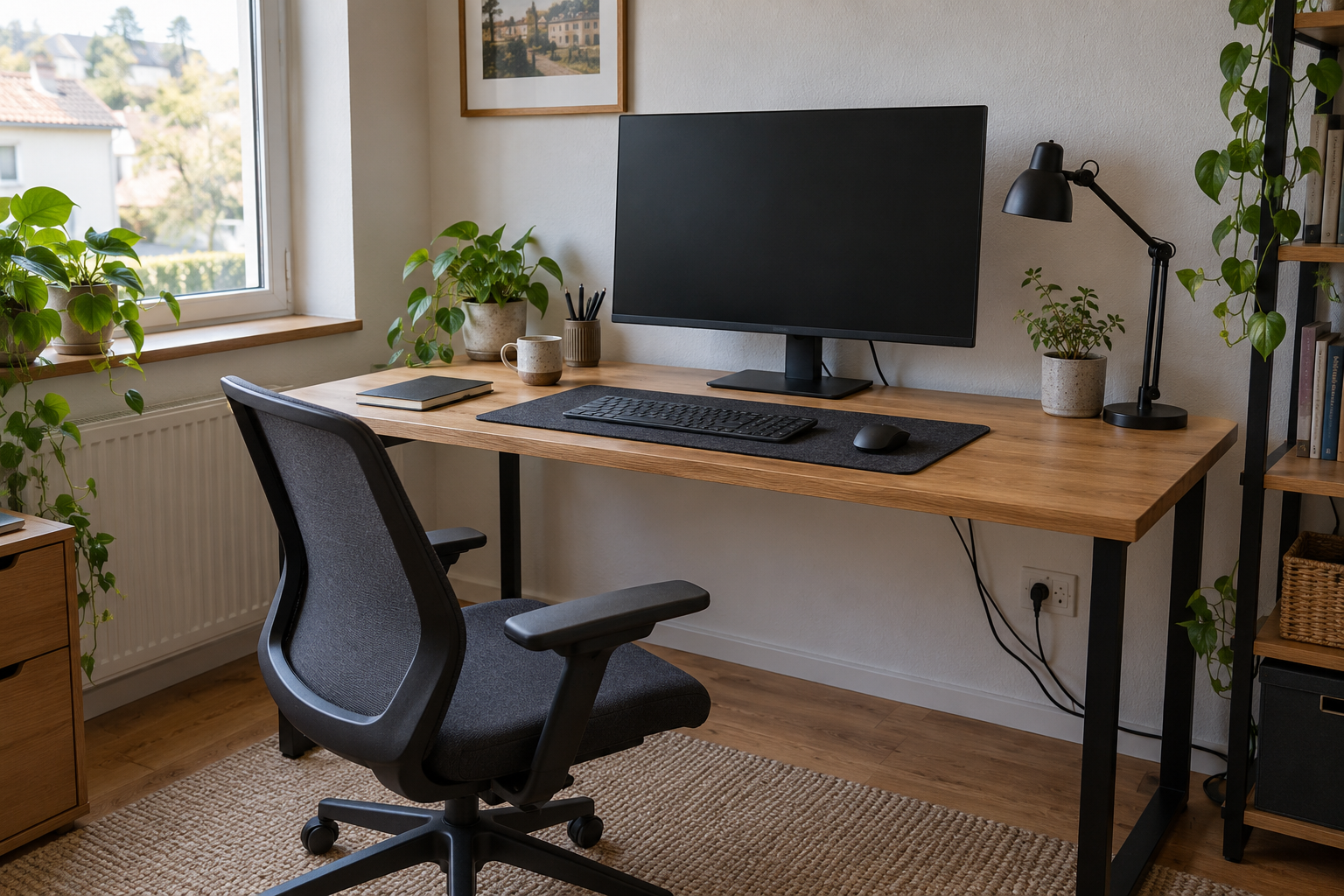
Use an L-shaped desk as two connected work zones rather than one oversized surface. Assign the corner deliberately so it does not become a place where equipment is hard to reach.
Your decision, at a glance.
| Decision | What to look at | Next check |
|---|---|---|
| Main edge | Keyboard and primary task | Direct chair approach |
| Return | Writing or secondary equipment | Separate clear working area |
| Corner | Chosen shared function | Reach and underside construction |
Choose the primary working edge
Place the keyboard and main display on the edge used for most of the session. Use the return for a distinct task such as writing, reference material or equipment storage. If you work at the corner, trace the actual chair approach and input-device positions rather than assuming the diagonal creates useful depth.
Measure inside and outside clearances
Record both legs of the desk, the corner shape and the usable depth on each side. A wall, drawer unit or door can limit access even when the desktop fits the floor plan.
Underneath, inspect the frame and supports before assigning a monitor clamp or keyboard tray. The corner joint may not provide the same mounting area as a straight edge.
Keep transitions easy
Try switching between the two tasks with the chair, cables and notebook in place. Avoid putting frequently used controls deep in the inside corner. Route connections so crossing between zones does not pull on devices.
If one side remains a permanent pile, give it a smaller defined role. Two clear surfaces for two tasks are usually easier to maintain than an unassigned overflow area.
Choose the right guide
This guide focuses on: use the corner of an l-shaped gaming desk. For a different task, see arrange a general gaming workspace.
Sources & scope
Product catalog snapshot: October 19, 2026. Selected primary references checked October 20, 2026. References are not current Amazon offer, price or availability verification.
This planning brief does not contain a verified exact-model specification or product ranking. Its checks define the information needed for a documented comparison; missing values are intentionally not supplied.
This is a research draft, not a hands-on review. How the research is used