A desk shelf should create a useful second level without taking away the working area below. Start with the objects it will hold, then check the feet, clearance and documented load.
Your decision, at a glance.
| Decision | What to look at | Next check |
|---|---|---|
| Display riser | Support footprint and documented load | Keep the stand fully supported |
| Accessory shelf | Objects stored and usable opening | Avoid blocking daily controls |
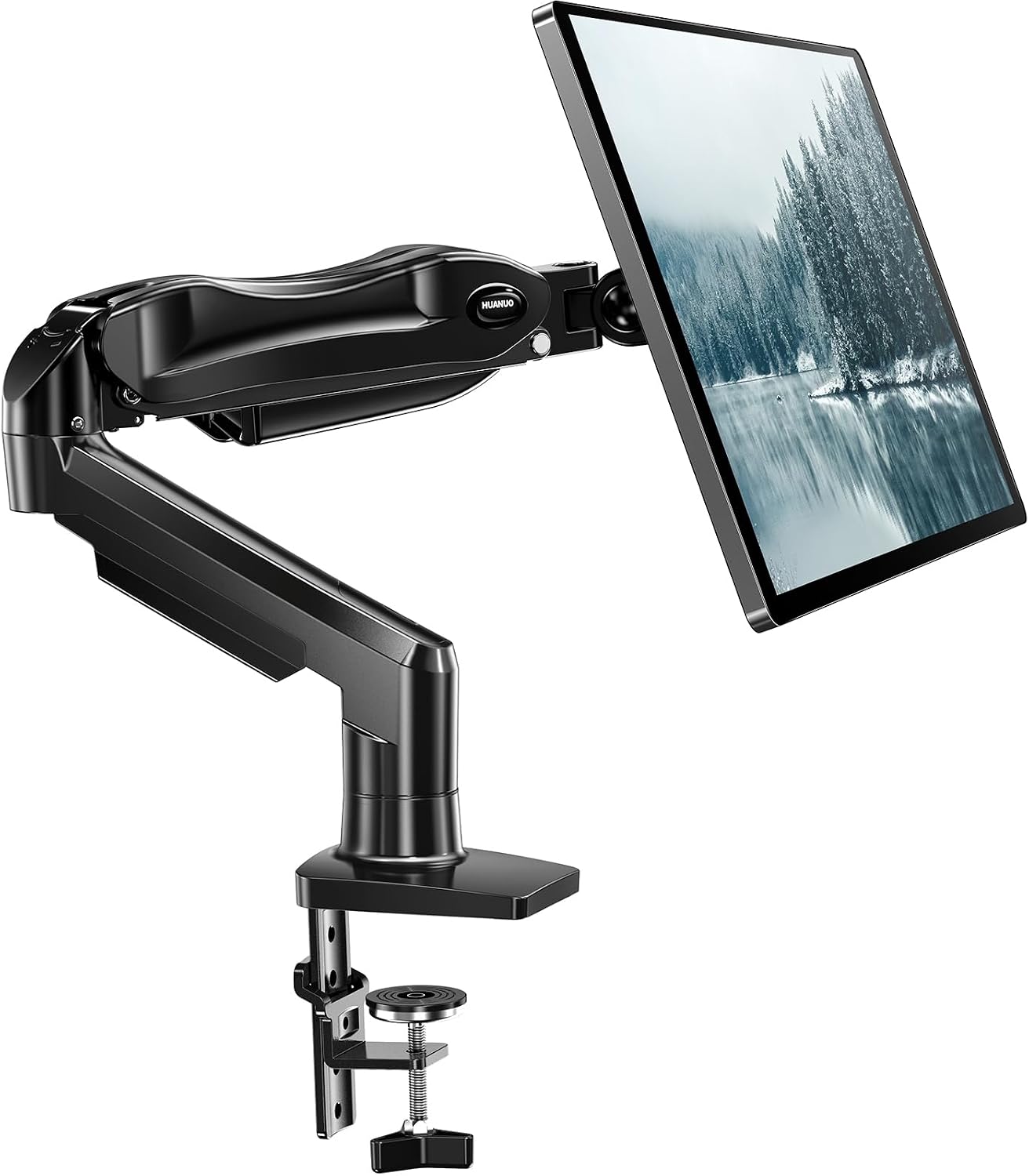
| Clamp shelf | Jaw geometry and permitted surface | Check load independently |
Name the contents of each level
Write down what belongs above and below the shelf. A monitor stand, speakers and a row of small accessories make different demands on top depth. A keyboard stored underneath needs a clear opening wide enough for the full keyboard and its cable.
Trace the supports as well as the top. Shelf legs can occupy the exact places where a keyboard corner, notebook or cable route needs to sit.
Distinguish storage from monitor support
A product sold as a shelf is not automatically documented to carry a display. Check the intended use and supported load for the exact assembly, including any modular additions. Do not infer a limit from wood thickness or a staged photograph.
The PawsWhirl clamp shelf remains deferred in this research because its load conditions are unresolved. Its recorded clamp range is not a substitute for a supported-use specification.
Test access before choosing the finish
Mark the proposed shelf on the desktop and simulate reaching for controls, moving the display and removing a stored keyboard. Check whether a lamp or camera will be hidden behind the new level.
If the shelf only hides a pile of loose equipment, first assign each item a storage location. A shallower or narrower arrangement may preserve more useful space than a full-width riser.
Choose the right guide
This guide focuses on: add a separate desktop shelf. For a different task, see choose a desk with built-in shelving.
Related hardware to investigate
Catalog references, not tested rankings. Confirm the exact configuration and open checks in each product note.
Sources & scope
Product catalog snapshot: October 19, 2026. Selected primary references checked October 20, 2026. References are not current Amazon offer, price or availability verification.
This is a research draft, not a hands-on review. How the research is used